Improving the process for acute care discharge in NSW Hospitals
NSW Health
Strategic Insight and foresight, Human centred digital transformation, Better government, Connected health
NSW Health is responsible for managing and funding health services in a wide range of settings, from multi-purpose health centres in remote communities to large metropolitan teaching hospitals.

“I do want to thank Tobias for going the extra mile with the discharge summary project. It was a valuable exercise from our end and I’ve been using the materials to demonstrate the value of the process within the CEC.”
Senior Manager, Organisational Development & Human Factors – Health NSW Clinical Excellence Commission
The transition of patient care from acute to the community setting is potentially a high risk situation for patients
The NSW Health Ministry of Health engaged Tobias to address this complex area. They wanted rigorous research and insight to answer some tough questions. In the acute hospital setting how can they:
- Streamline the process for managing hospital discharges?
- Reduce the number of patient re-admissions?
- Better manage patient information?
- Deliver better patient outcomes?
- Improve pre and post discharge phases of care?
Creating an acute care discharge summary from a hospital setting is a complex process involving many clinicians across multiple disciplines and is a key experience for patients and their ongoing care. It also has funding and organisational implications for hospitals and staff. Improving this critical process has many benefits for the Ministry of Health and patients.
The aim was to identify ways to improve the acute care discharge process by first developing a deep understanding of the current state and any challenges to its effective delivery and then to identify opportunities to take forward.

A powerful set of artefacts expertly communicated the insights
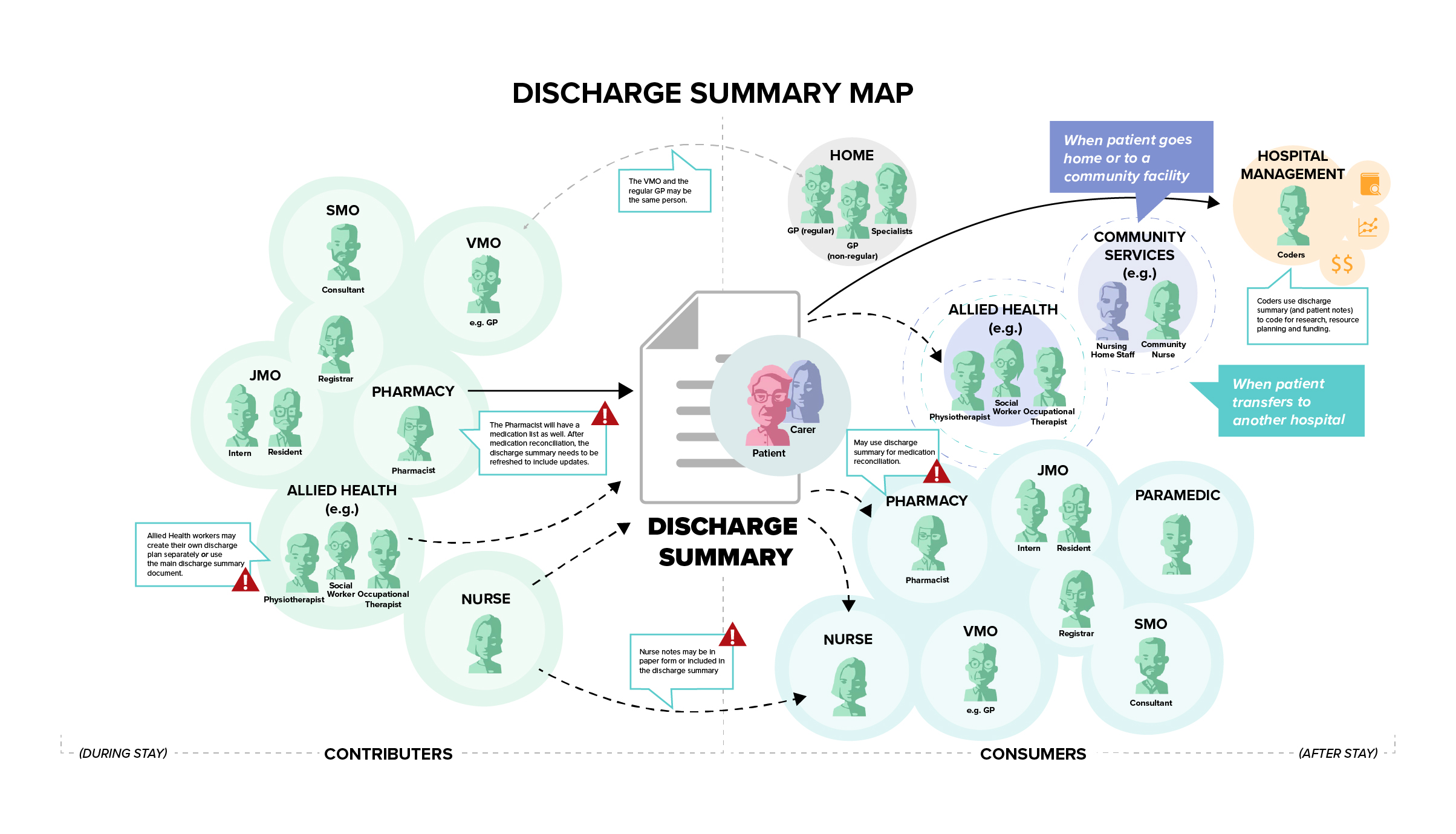
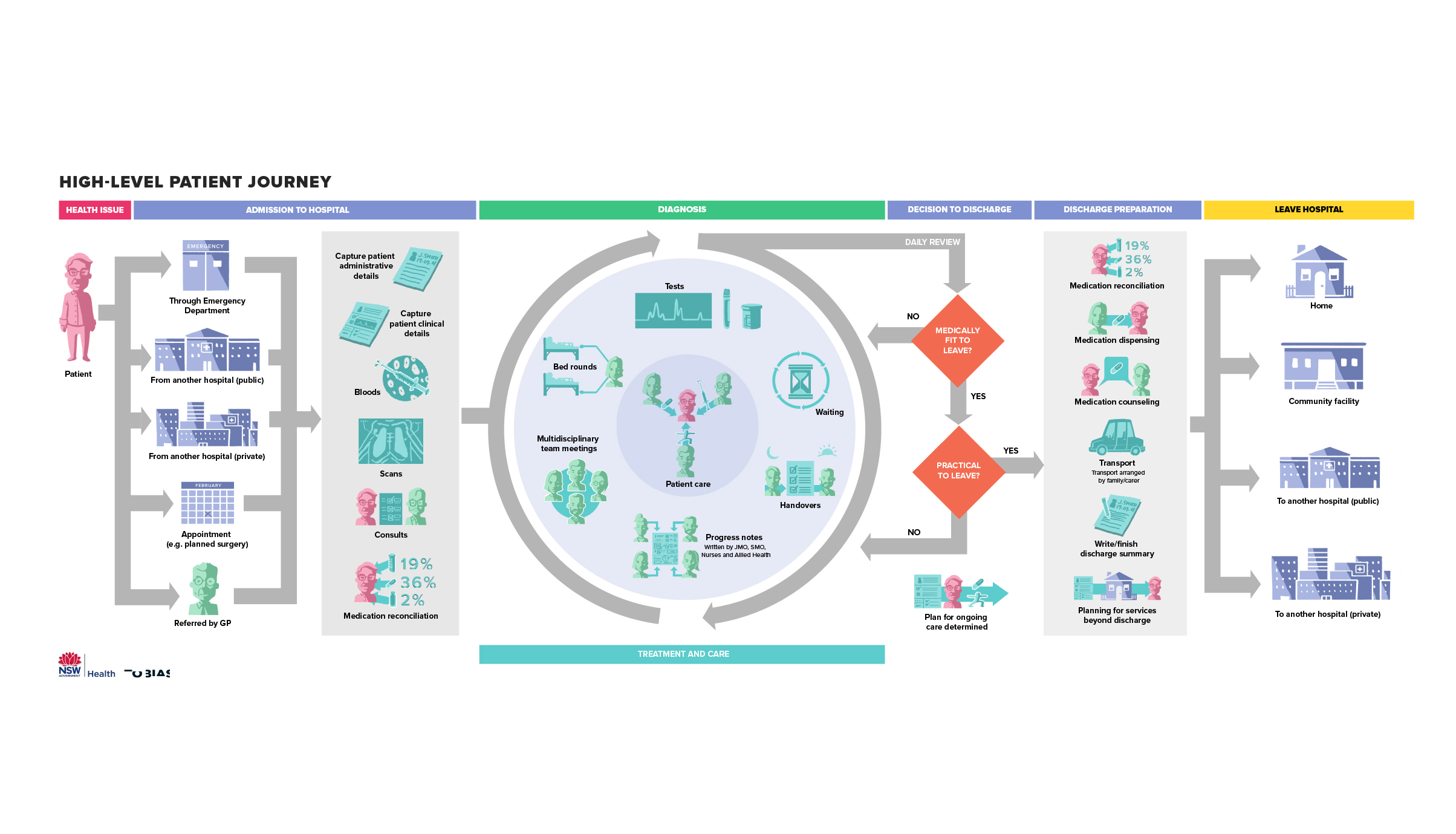
Tobias co-designed a research program with MoH to ensure we had a deep contextual understanding of the way in which discharge summaries are created. This involved observing the end-to-end process in multiple hospital settings. We observed and talked to people in a large range of roles in in-depth interviews and workshops and we conducted field research to understand the context of use by shadowing during MDT meetings and rounds in multiple hospital settings. We also identified and mapped the many different digital systems underlying the process to see where opportunities lie for alignment and improvement. The project took place over 14 weeks.
LHDs and Hospitals visited:
Northern Sydney
- Royal North Shore Hospital
Western Sydney
- Westmead Hospital
- Royal Alexandra Hospital for Children
- Blacktown Hospital
- Mount Druitt Hospital
Western NSW
- Dubbo Base Hospital
- Wellington District Hospital
Southern NSW
- Goulburn Base Hospital
- Queanbeyan District Hospital
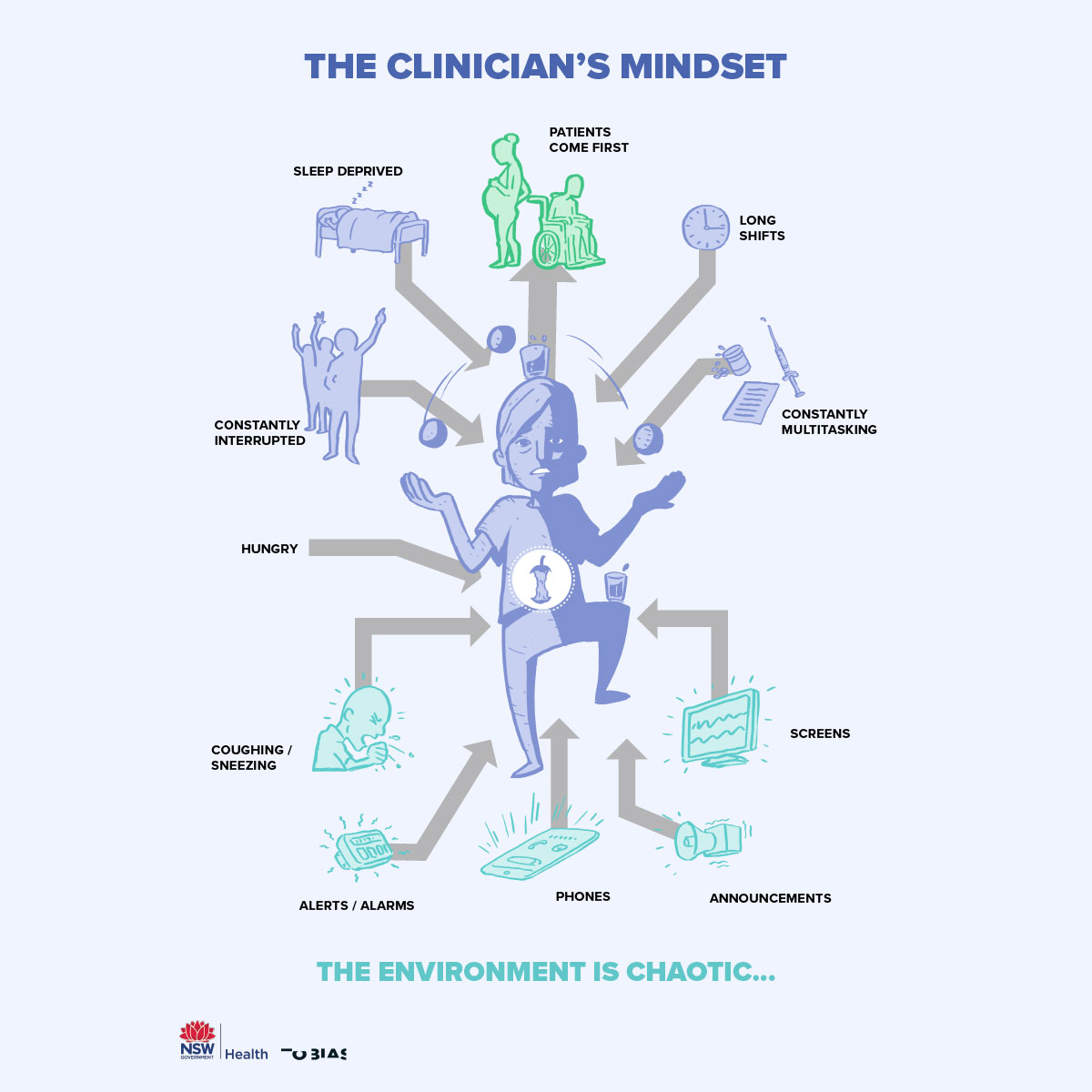

A powerful set of artefacts expertly communicated the insights. A report and a range of artefacts articulated the complex processes, systems and dependencies required to create a discharge summary.
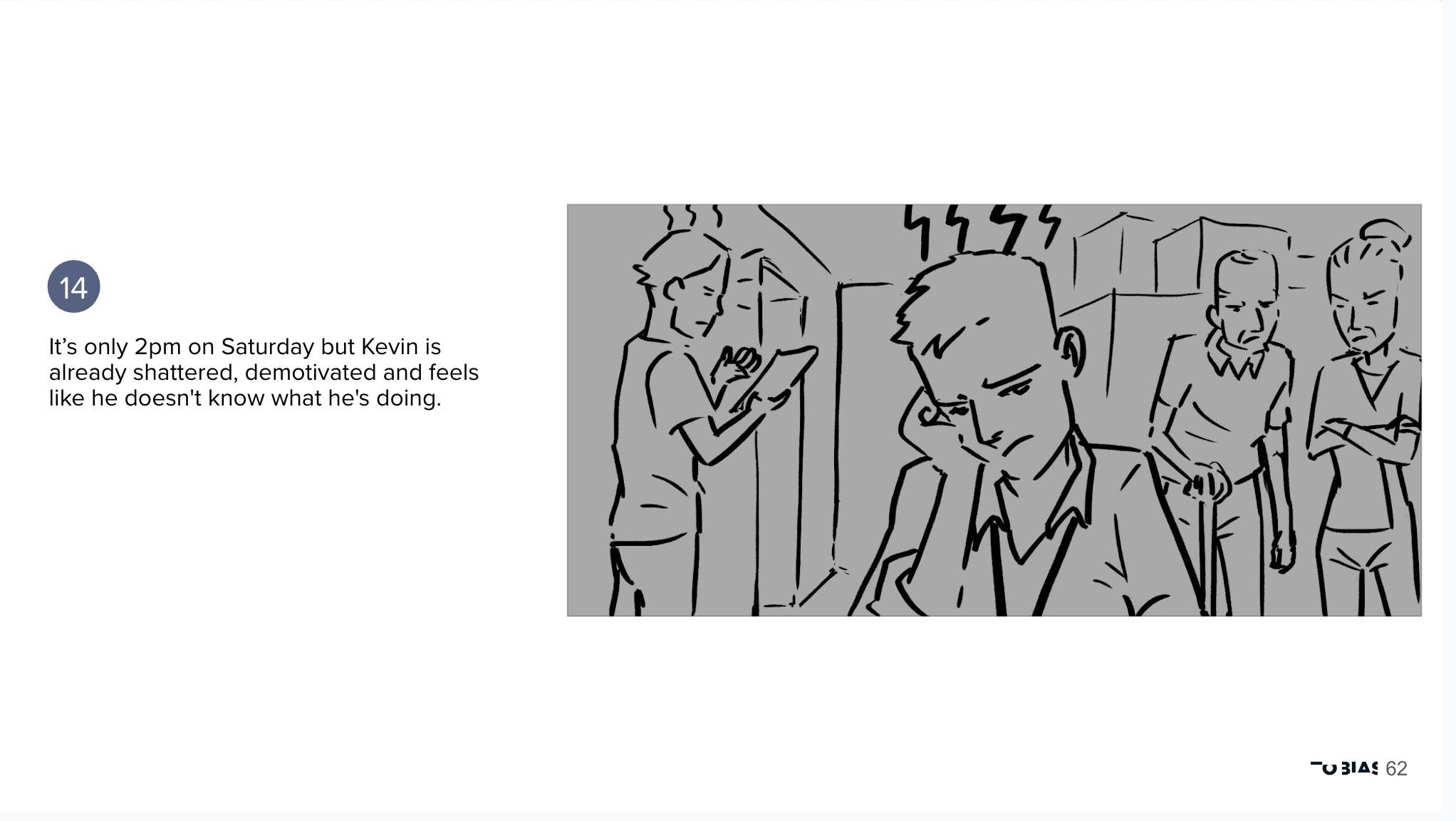
Vignettes were created to show in narrative form how the experience of Junior Medical Officers, who are largely responsible for the Discharge Summary, navigated the pitfalls, overcame barriers and took care of patients against the backdrop of a highly stressful and demanding environment, where potential for risk is extremely high. The narratives pointed out where the problems occur in worse case scenarios and where in contrast the exemplary processes that more experienced practitioners had developed lay. We showed where this could be scaled to improve outcomes for both practitioners and patients.
Clear opportunities were identified to streamline and codify a common practice, the processes that worked and the system changes required to improve the quality and outcomes for clinical staff patients and NSW Health.
- The priority opportunity areas from their perspective (priority vote); and
- Priority opportunity areas that were feasible to action in the short-term (feasible priority vote).
- Systemic issues to take into consideration
Playback Report and Prioritisation
15 opportunity areas were identified based on the research. 12 opportunity areas were mapped on an axis of impact and ease of implementation in the playback and prioritisation workshop with the stakeholders. Following this, stakeholders participated in a dot-voting exercise to identify:
- The priority opportunity areas from their perspective (priority vote); and
- Priority opportunity areas that were feasible to action in the short-term (feasible priority vote).
Action Orientated
Through participatory exercises in the playback workshop, the stakeholders discussed the findings, prioritised opportunities and defined next steps for improving the discharge process in NSW hospitals.
The workshop reached a consensus for the next priority step for a human centred design approach to improving the acute care discharge process. The final workshop activity explored how to engage and understand perspectives required for the next steps.
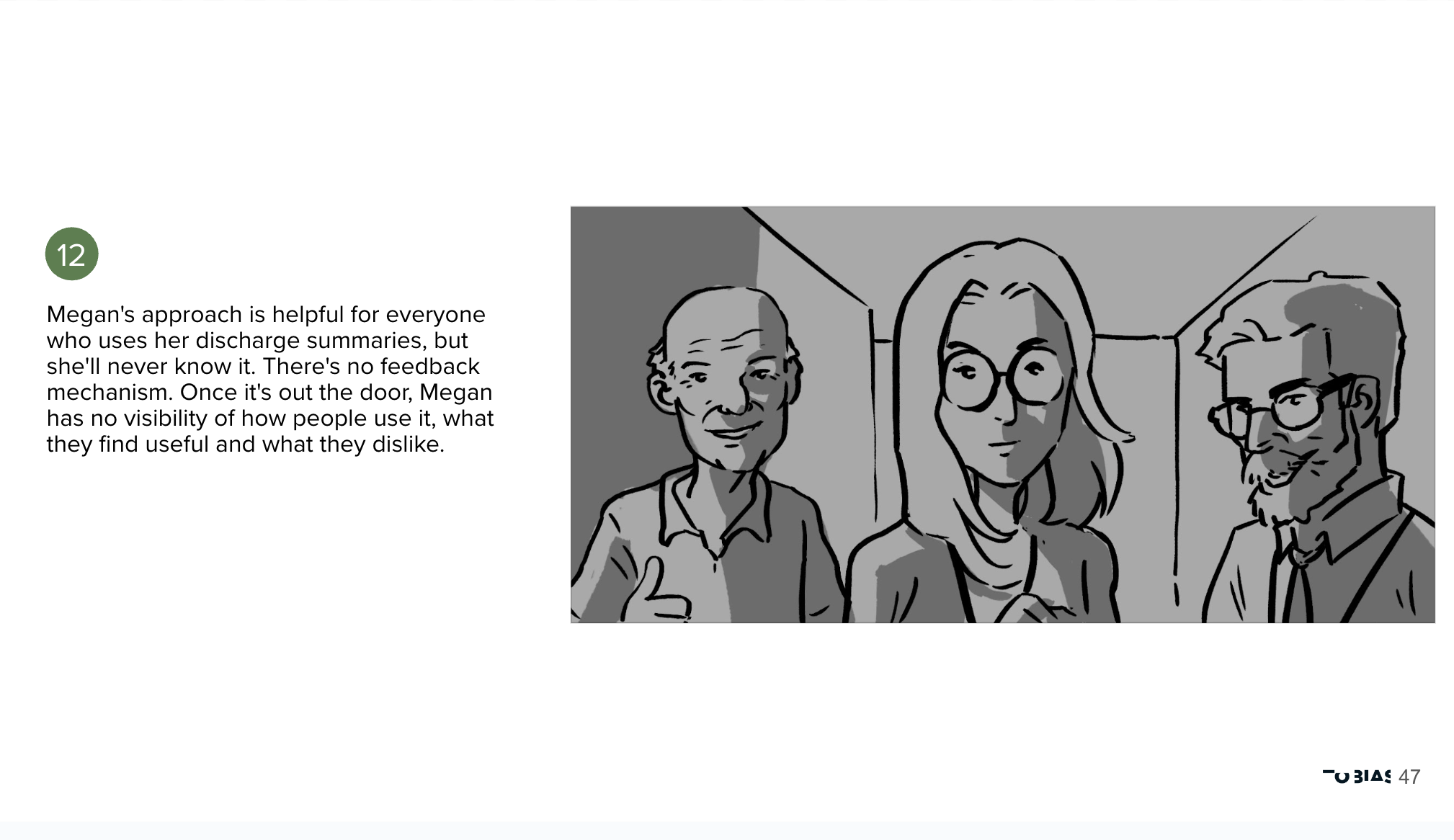
Improving this critical process has many benefits for the Ministry of Health and patients
The Ministry of Health is improving the Acute Care Discharge process using the project outputs as an evidence base to prioritize and make clear decisions on how to move forward to create a safer process with timely information provided to the right people, enabling a smoother transition and continuity of care for patients and unlocking time and resources for the clinicians and hospitals.
The Benefits of improved electronic discharge documentation include: traceability; timeliness; legibility; content; decision making; safety and improve patient outcomes.