Regulatory reform: Creating a digital solution to improve Australia’s economy
Department of Finance
Strategic insight and foresight, Human-centred digital transformation, Better government, Innovating for thriving futures, Responsible AI

The Department of Finance sought to streamline a service to improve workforce stability, increase productivity, and ultimately benefit individuals and society by taking a human-centered, holistic and national approach to regulatory reform. By surfacing new insights and opportunities Tobias informed a case for change, outlining evidence-based opportunities for reform supported by our digital transformation expertise. We delivered a conceptual prototype, a digital solution, which now drives discussion to inform business case decisions around investment.
Streamlining and digitalising the process for efficiency and effectiveness
Tobias was tasked with identifying ways to leverage digital technology to create an effective and efficient solution for a regulatory environment and process that is complex and historically inconsistent across sectors and jurisdictions.

Human-centred, holistic and nationally coordinated approach to regulatory reform
The project objective was to streamline the service to improve workforce stability, increase productivity, and ultimately benefit individuals and society. By taking a human-centred, holistic and nationally coordinated approach to regulatory reform, we delivered a prototype of an interoperable system that would make the service simpler for the user groups.
Through this project Tobias championed Whole-of-Government collaboration. As the Department’s strategic design partner we actively pursued opportunities to connect project teams from different states and territories as well as Australian government bodies where there are initiatives in flight, various levels of commitment and information.
RESEARCH & SYNTHESIS
As a strategy and design partner we worked with the Department of Finance team to collaboratively extract data and information from the key stakeholders in government and the industry, conduct research and map the current state of the regulatory processes, practices and systems. By engaging with an ecosystem of stakeholders, analysing secondary research and engaging in current state journey mapping, we were able to identify assumptions, form early hypotheses and design a robust qualitative research approach.
We then conducted qualitative research with the primary user groups – workers and employers – to gain an in-depth understanding of the current state. Key findings, pain points, insights and behavioural archetypes were summarised and presented, and opportunities for streamlining and automating the process were identified.
We took an ethical, fair and inclusive approach to service user and stakeholder engagement. Recruitment for the user groups focused on seeking out traditionally underrepresented groups across each state and territory of Australia, with a mix across CBD / suburban and regional / rural areas, and inclusive of culturally and linguistically diverse and LGBTIQA+ communities. A visually enhanced, simplified English consent form and information sheet were used to support informed consent.
In parallel, we worked closely with the Department to inform their policy paper with consideration for the existing legislative boundaries and stakeholder ecosystem.
CONCEPTUAL PROTOTYPE
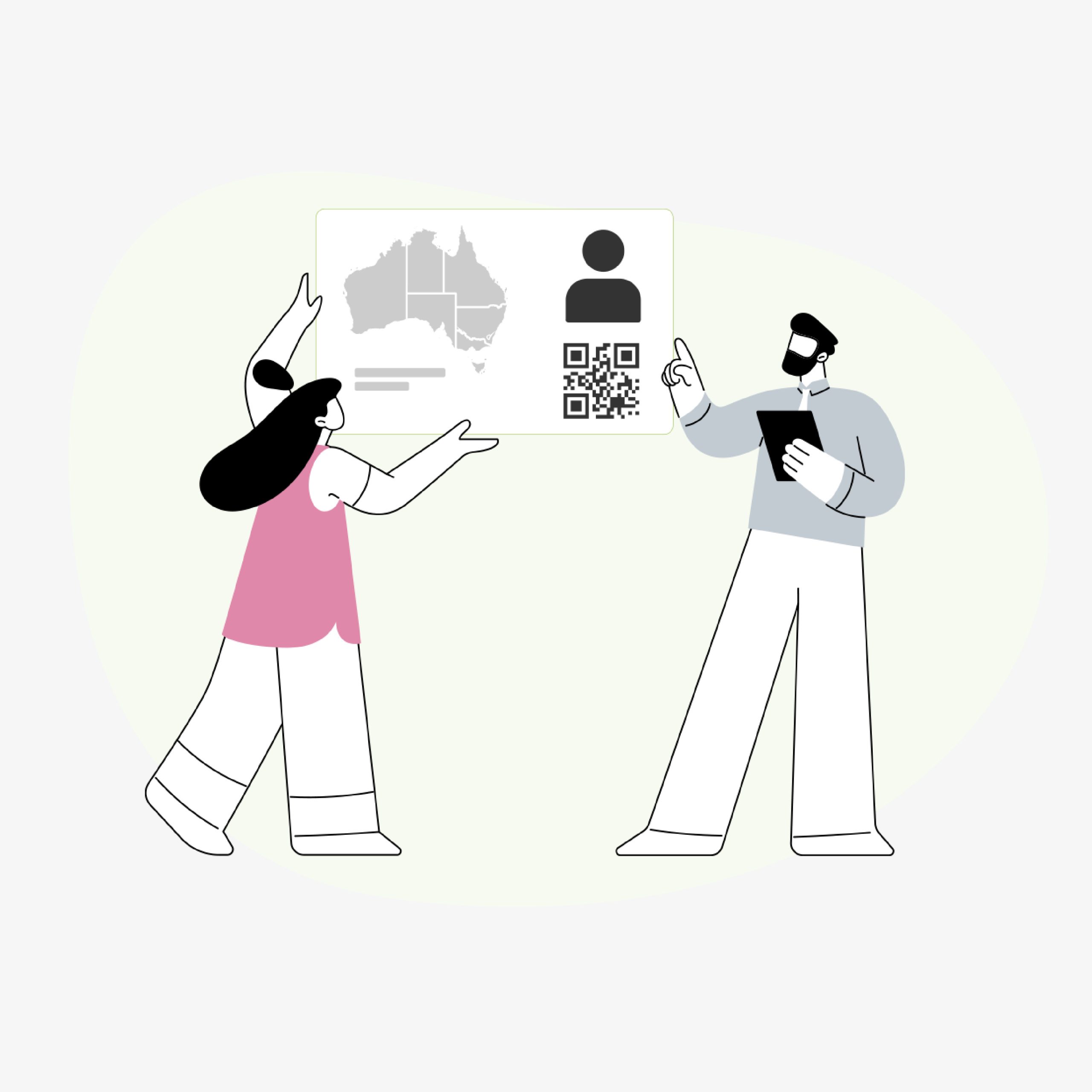
A conceptual prototype was created, visualising a digital solution including AI automation technology and cloud computing. To communicate the concept with stakeholders across various levels of government, we created a narrative supported by illustrations and a video, bringing to life the future state journey of a service user. We also visualised what this journey would mean for the interconnected government bodies’ systems, data journeys and channels, saving time, effort and resources for workers, volunteers, employers and government.
EVALUATION FRAMEWORK AND PROGRAM LOGIC
A Program Logic model and an evaluation framework were developed as we started to refine the conceptual prototype to provide the foundations for evaluation activities in the future. This work included identifying data indicators that may act as success criteria, and assisting in the identification of baseline data to measure change.
The process of developing a logic model was a powerful mechanism for ensuring that the stakeholders agree on the purpose and expected outcomes of this reform concept. It also provided a sound basis for conducting cost benefit analysis for phased operationalisation.

Conceptual prototype driving investment discussions
The insights and opportunities surfaced informed a policy paper outlining evidence-based opportunities for reform and the conceptual prototype brought to life a cross-jurisdictional digital solution. The output of the project responds to jurisdictional and operational needs and the workers’ and employers’ pain points and now drives discussion to inform business case decisions around investments.
Across the 16 week engagement, the full set of deliverables for the project included:
- Current state journey map
- User Archetypes
- Current state report and presentation
- Review of policy paper
- Conceptual prototype
- Program logic and evaluation framework
- Final presentation video