Do consumers know – or care – about mobile payment networks?
Australian Payment Plus (AP+)
Human-centred digital transformation, People-centred finance

Australian Payments Plus (AP+) sought to understand the consumer context of least-cost routing (LCR) for mobile wallet transactions.
AP+ engaged Tobias to explore how consumers interact with mobile payment systems and their awareness and preferences for payment network options. Not surprisingly, consumers’ habitual use of mobile wallets as quick “tap-and-go” tools was found to create friction when introducing additional choices. Multiple prototypes and patterns were tested in role play-based qualitative research, to tease out the right balance between informed choice and minimal disruption to the transaction experience.
Informing policy-change around least-cost routing: How can we promote consumer choice at point of purchase?
The Payment System Board aimed to implement LCR for mobile wallet transactions by the end of 2024, with “merchant choice” as the default but with provisions for consumer choice. This posed two major challenges:
- Ensuring consumers could actively choose their preferred payment networks without compromising the seamless “tap-and-go” convenience they expect.
- Educating users about payment networks – concepts largely unknown to the public – without disrupting the transaction flow.
AP+ turned to Tobias for consumer input on how to strike a balance that maintained usability while fostering informed consumer decisions.
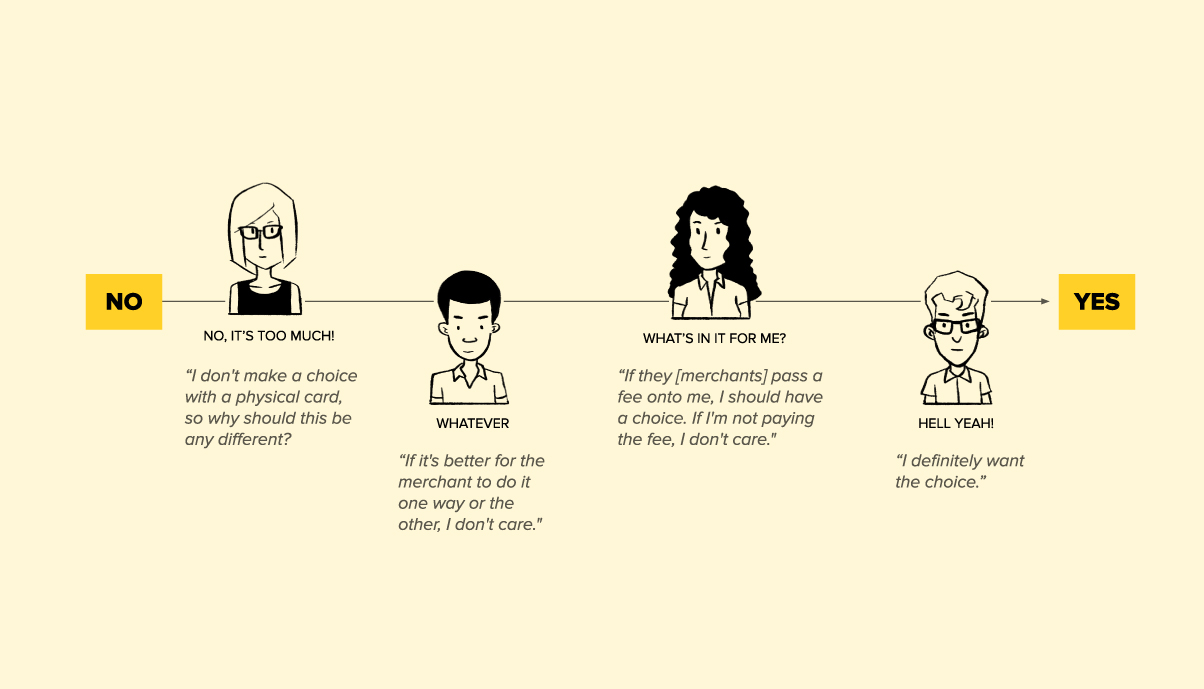
Mixed reactions for the idea of “Choice”
Point-of-sale immersions and creative qualitative research, coupled with fast iterative prototyping
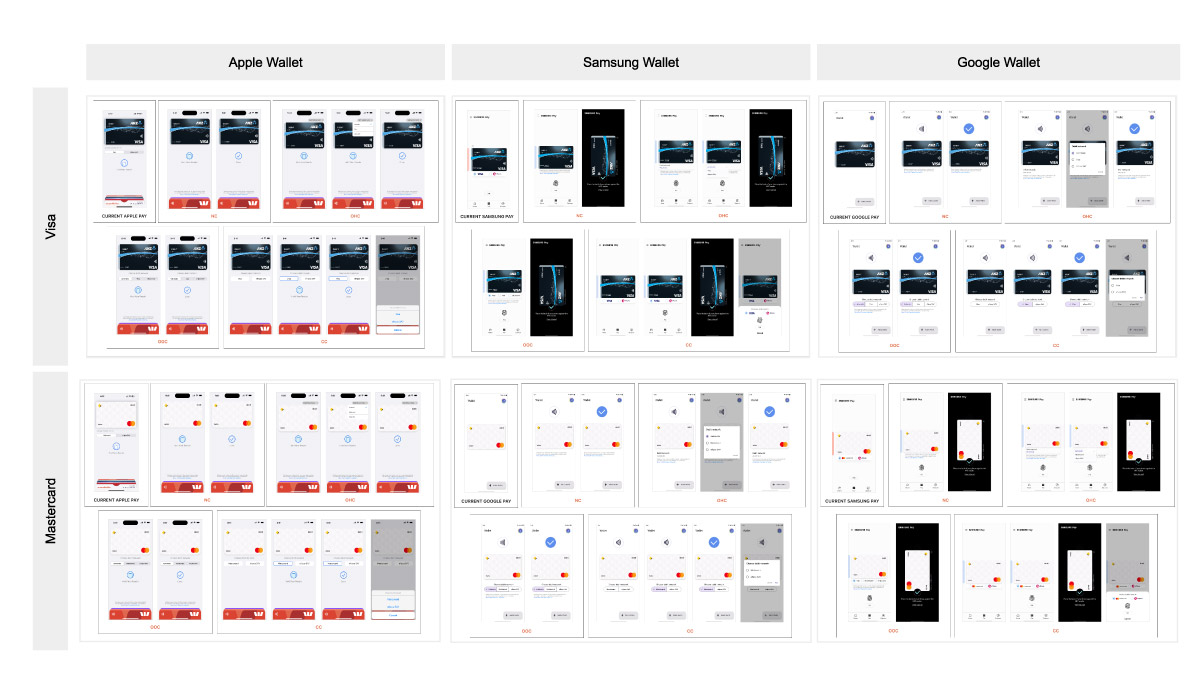
Tobias worked closely with AP+ to refine the suggested payment patterns, create high-fidelity prototypes, and test these with consumers in a couple of different ways.
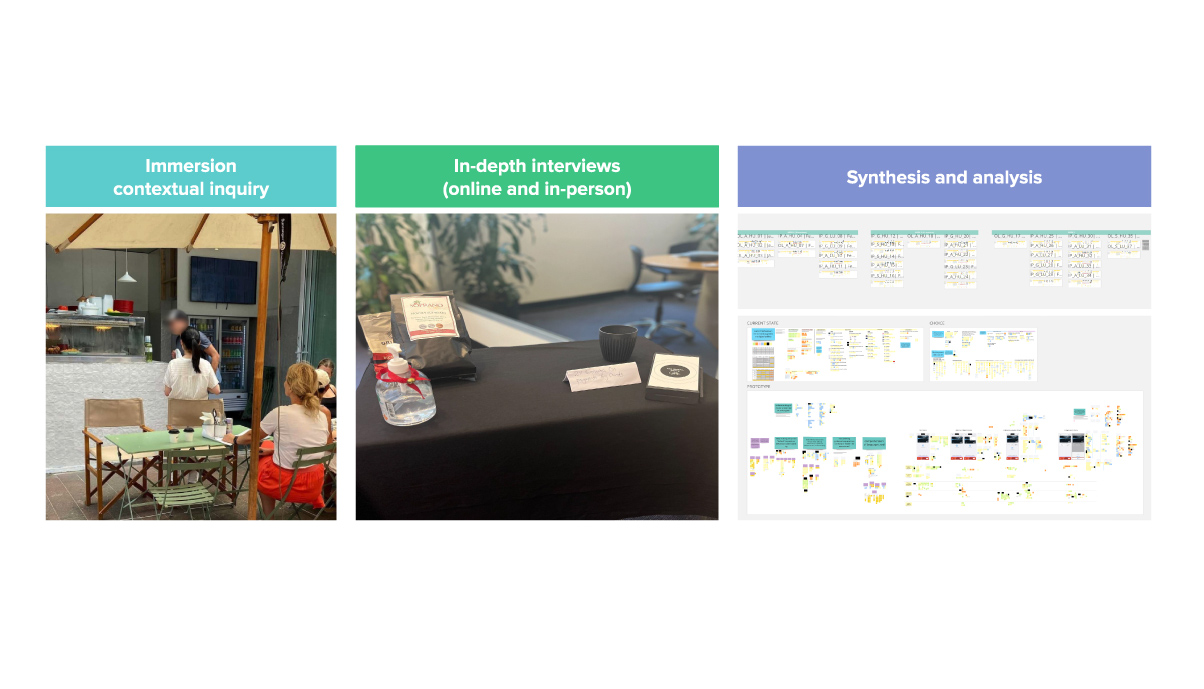
- Immersion/contextual inquiry: Observations of real-world mobile payment behaviours and intercepts in food and retail environments provided a baseline understanding of current practices.
- Depth interviews with role-play scenarios: Semi-structured interviews with 33 mobile wallet users across various demographics explored familiarity with payment networks, responses to prototypes, and preferences for choice mechanisms. Interviews were conducted in a lab setting in which the researchers set up mock environments matching various payment situations (grocery stores, retail and petrol stations). Four main prototypes/patterns were rotated and tested in context, along with exploratory conversations to gauge awareness around payment networks, and interest in having a choice of what network is used for payments.
- Synthesis and analysis: Over 3,500 data points were analysed and synthesised to identify recurring themes and insights. Not surprisingly, we found that consumer awareness in relation to payment networks was almost non-existent, and their habitual use of mobile wallets as quick “tap-and-go” tools was found to create friction when introducing additional choices.
Prototypes for testing
Clear guidance and inspiring discussions around how to balance informed choice with usability of the payment experience
The research provided clear recommendations to balance usability and consumer choice:
- Education is key: Our participants had very little awareness of payment networks, or understanding of what choosing a network would mean to them and to the merchant. They expressed a desire for more information about this but confirmed this would need to happen outside the actual purchase experience, for example in the mobile wallet settings or onboarding processes.
- Preference for automation, with choice operating in the background: Most users favoured an “automatic” network selection option that defaulted to merchant preferences while allowing manual overrides when necessary. This preference seemed to stem both from the desire to have autonomy, and from the desire to save money where possible. What was very clear was that consumers did not appreciate their mobile wallets covertly defaulting to a payment network that actually charged higher fees. For some respondents there was also a clear preference for a network that was “Australian”, rather than international.
- Usability first: The quick-tap experience remained paramount, with overt or compulsory choices at the point of purchase seen as too disruptive.
The findings provided important strategic input to the plan for implementation of LCR in mobile wallets and highlighted the importance of balancing usability with providing informed choice in regards to selection of payment networks. The project also provided a chance for AP+ to cement their position as an Australian payments provider who cares deeply about informed consumer choice and who constantly strives to create better experiences for payment technology consumers.