
Mental health referral pathways
Health Design Lab
Better Government, Connected Health, Strategic Insight & Foresight

Through qualitative research and design synthesis, Tobias supported the Health Design Lab’s endeavour to understand the consumer and carer experience of the mental health referral landscape across six participating primary health networks along the Australian east coast.

“The Tobias team were great to work with. The team were disciplined, professional and highly communicative. They were able to stand-up the project quickly without compromising quality and they delivered to each of the agreed milestones. Moreover, their organisation helped keep our team on track. The regular check-in sessions between the teams and the sharing of insights made for better project outcomes.”
Kathryn McCabe | Director, Health Design Lab
Challenges to accessing care can exacerbate mental health issues
The awareness of mental health increased dramatically during the COVID pandemic leading to a renewed focus in this important area of population health. The Department of Health’s Health Design Lab identified the mental health referral pathway as a key part of such improvements. The challenge was to identify the barriers and pain points across stakeholders and systems within the referral pathway to inform what initiatives could work and what needs to change to make meaningful improvements.
A tailored approach and ethics approval is required for research in mental health
We worked in partnership with the Design Lab project team to recruit and conduct research sensitively and in line with the ethics protocol approved for the project.
In the 69 qualitative research sessions we engaged participants in one hour interviews. 13 were carers who have recently assisted another individual in managing their mental health and seeking support and 56 were consumers who independently managed their mental health or sought assistance from a health provider.
Participants were recruited across six primary health networks (PHN) including North Brisbane, Western Queensland, South Eastern New South Wales, North West Melbourne, the ACT, and Tasmania. Participants were recruited across metro, regional and rural areas with these PHN’s
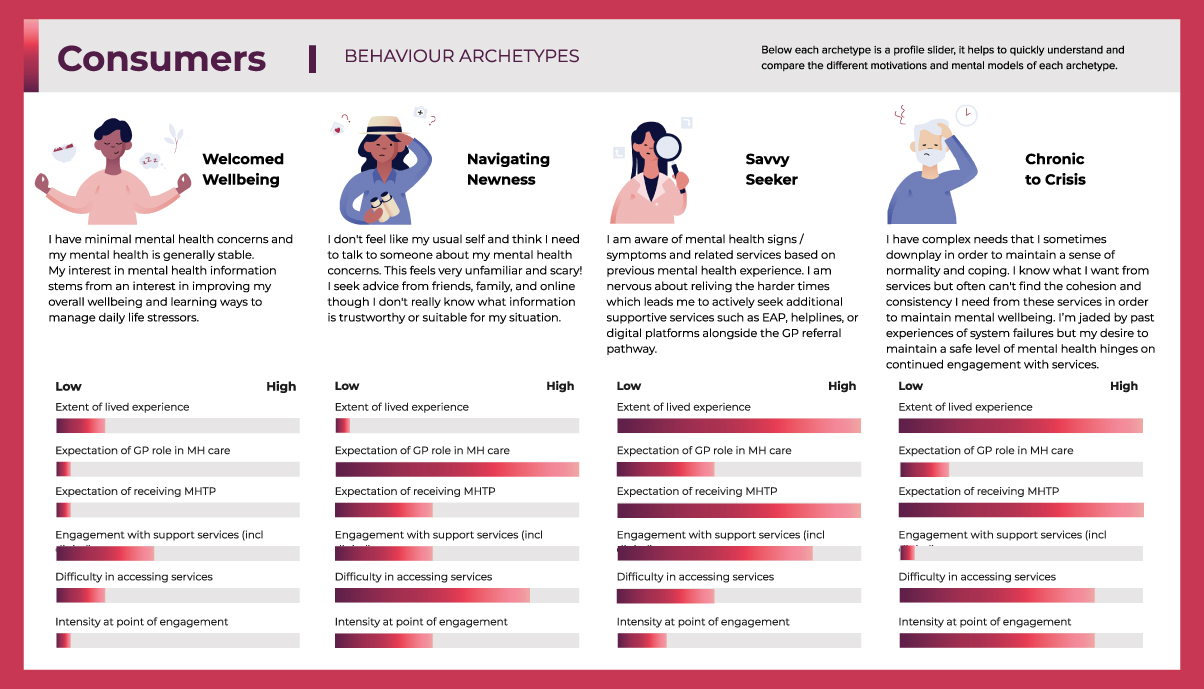
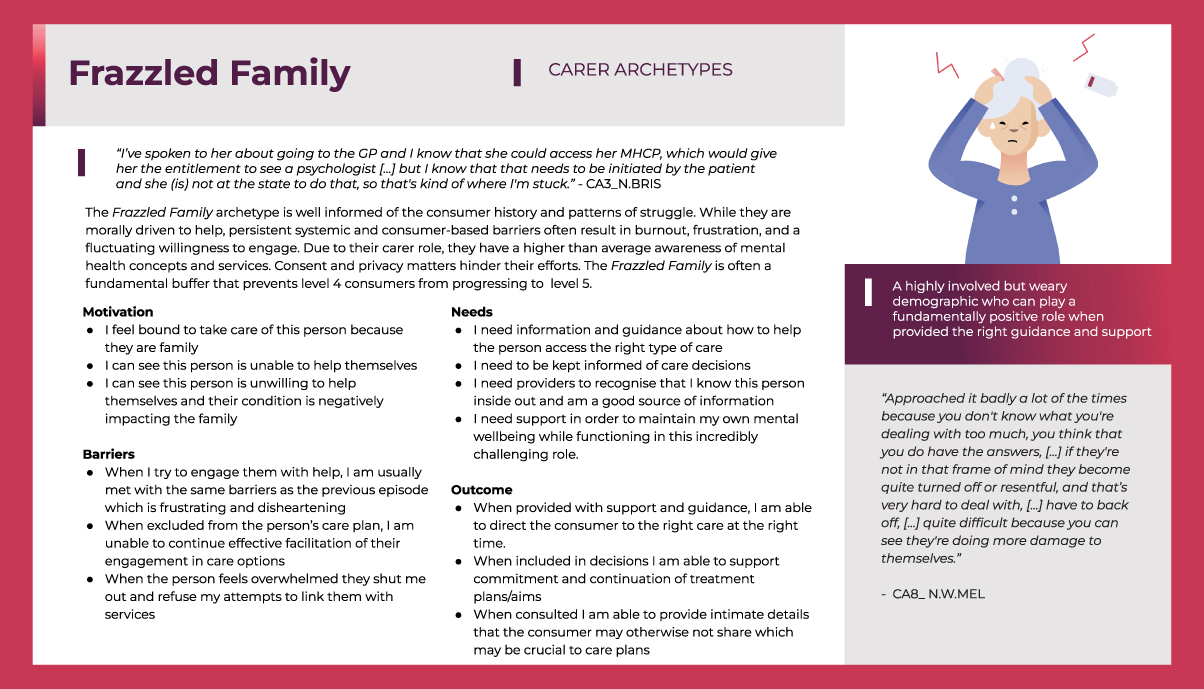
Synthesis of the findings produced key themes and insights into the consumer and carer journey across the referral pathway. The findings were shared in collaborative sessions to compare and contrast findings with concurrent aligned research with the client during the project lifespan prior to development into behavioural archetypes, current state journey map and comprehensive report. As a result, we were able to support the client in meeting their multiple needs, augmenting their team to support the project, while continuing to uncover the unique needs of the consumers and carers.
A strong evidence base is essential to making good recommendations for change
As part of a combined team working towards a common outcome we supported the Health Design Lab team to create and use research insights to build recommendations for enhancements and solutions.
From the qualitative research with consumers and carers Tobias clearly outlined a journey highlighting enhancers and disrupters to the referral pathway as well as a series of opportunities aimed at improving the overall experience of seeking mental health support within the community setting.
Additionally the behavioural archetypes and full report provide an in-depth evidence based guide to user needs and values that can drive refinement of solutions and improvement of the mental health referral pathway and overall development and delivery of community mental health services.
These will provide an evidenced based direction for the future state and service delivery improvements. Driving core changes and action.


